
Introduction:
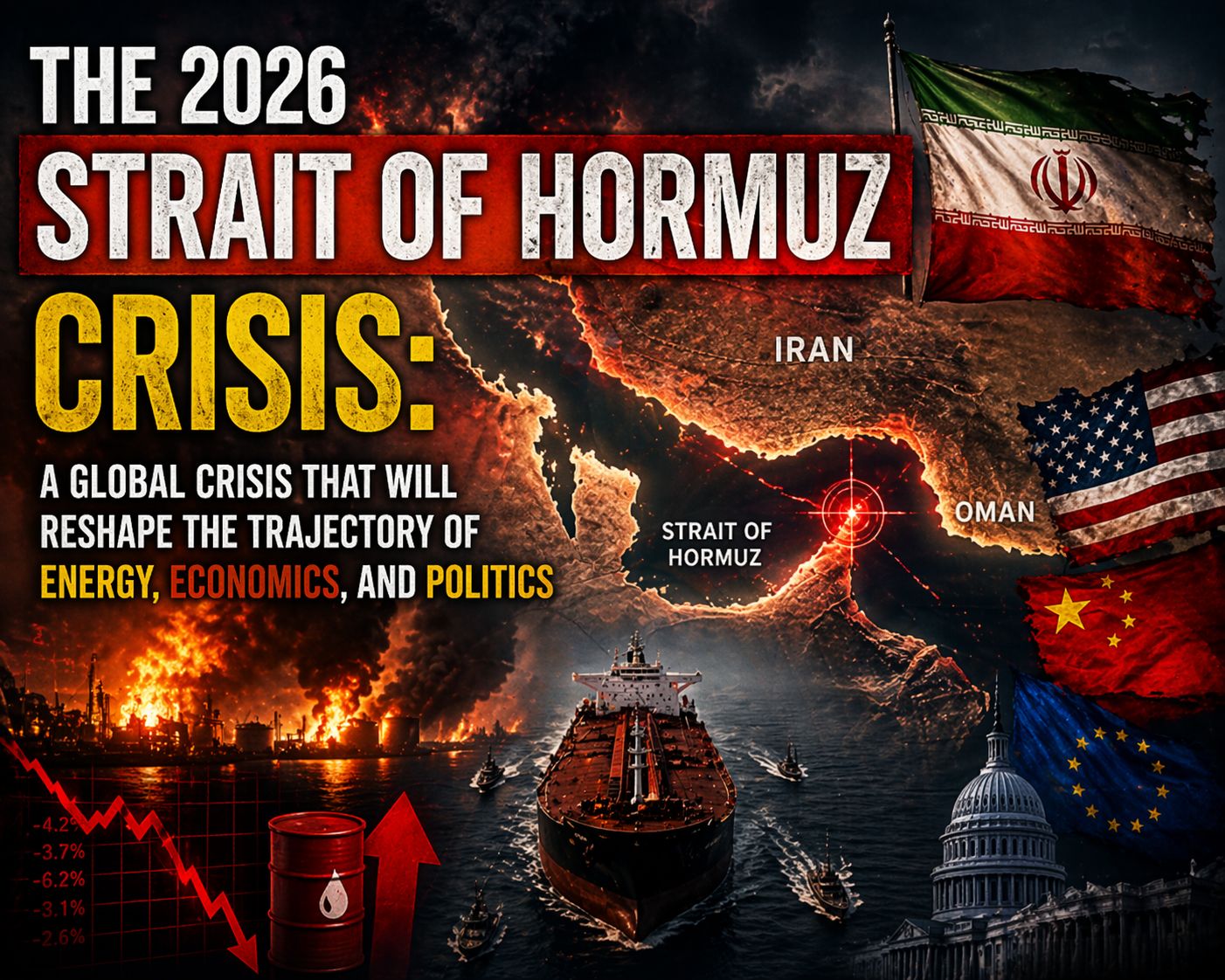
Over the past decade, numerous grave political crises have emerged. However, since the oil crisis of the 1970s, the Strait of Hormuz crisis has emerged as one of the direst among them. On February 28, 2026, the air forces of the United States and Israel commenced a bombing campaign against Iran. The conflict that precipitated this situation—which has now evolved into a global energy and economic crisis—is exerting a profound impact on international trade, oil prices, and diplomatic relations among various nations.
Immediately following the death of Ali Khamenei, the situation spiraled out of control. Iran not only mobilized troops for war but also launched attacks on the world's most critical oil transit hub. Within a span of just a few days, global maritime transport and trade came to an almost complete standstill. As oil prices skyrocketed, severe economic crises erupted in numerous countries worldwide.
The Strait of Hormuz and its importance:
The Strait of Hormuz is one of the world's most important waterways. This waterway carries 20 to 25 percent of the world's total daily oil supply. This strait connects the Arabian Sea to the Persian Gulf and is of immense importance for the transportation of oil from the Middle East. This shipping route is very important for the economies of Europe, China, Japan, and India. If anything goes wrong in this area, the effects are felt right away all over the world economy.
The Chronicle of the 2026 Crisis:
- On February 28, 2026, the United States and Israel launched a joint military offensive against Iran. Thus began the crisis.
- Iran's top-ranking leaders were assassinated. In retaliation, Iran launched missile strikes, deployed drones, and issued threats of military action from the sea.
- In response:
- Iran blockaded the Strait of Hormuz.
- The United States deployed warships to the region with the aim of intercepting other vessels attempting to approach Iranian ports.
- Several commercial vessels were damaged or came under attack. As a result, maritime shipping traffic has come to a virtual standstill.
What is happening in April 2026?
Currently, very few ships are in transit; only a handful of vessels pass through this maritime route each day. Iran has repeatedly stated that unless the United States takes the first step, they will not take any unilateral action.
- The situation has taken a turn for the worse since the United States seized control of an Iranian vessel.
- The ceasefire talks have largely proven to be a failure, and it does not appear that these discussions will continue. As a result, oil prices have risen sharply.
- The situation remains highly unstable, and predicting its future trajectory is quite difficult.
The Multifaceted Impact of This Crisis:
- A massive surge in global oil prices—
- Currently, the price of a barrel of oil is fluctuating between $95 and $100.
- Fuel (petrol/gasoline) prices are continuously rising across the globe.
- Even in developing economies, the cost of essential commodities is on the rise.
- Disruptions to trade activities between various nations—
- More than 150 ships are either stranded or have been forced to divert to alternative routes.
- Shipping insurance costs are continuously increasing.
- Disruptions have emerged within the supply chains connecting Asia and Europe.
- Economic instability—
- Stock markets are on a downward trend, as investors remain uncertain about how to proceed in the current climate.
- The shipping and aviation industries have been the hardest hit.
- If this crisis persists, the global economy could slide into a recession.
- Crises regarding food and other commodities—
- Due to rising fuel prices, the costs of wheat and fertilizers are also climbing.
- This is impacting the agricultural sectors of import-dependent nations.
- The risk of a food crisis or food shortages is steadily intensifying.
- The military situation may deteriorate further—
- Conflicts and skirmishes persist in both the aerial and maritime domains.
- There is a significant risk of a full-scale war breaking out in the Middle East.
- The roles of Saudi Arabia, the United Arab Emirates (UAE), and Pakistan in this region.
- Impact on India—
- India imports the vast majority of its required oil from the Middle East. The prices of gas and other imported commodities are steadily rising.
- The government is keeping a close watch on maritime routes; currently, some Indian vessels are still able to navigate without encountering any issues.
Shifts in Politics and Strategy:
A single misstep or a catastrophic event could radically alter the entire situation. Currently, various nations are—
- Seeking alternative avenues to acquire power.
- Increasing their oil reserves for strategic reasons.
- To strengthen their military presence and partnerships in the Gulf region.
- Future Prospects:
This crisis could intensify in three different ways:
- Reopening the strait through diplomatic negotiations (the scenario least likely to materialize in the near future).
- A prolonged stalemate: a situation characterized by recurring disruptions that gradually erode the foundations of the economy.
- The direst potential outcome is an all-out war—the far-reaching repercussions of which would be felt across the entire globe.
In brief:
The 2026 Strait of Hormuz crisis is of paramount importance—not merely for a select few, but for everyone. A single narrow waterway possesses the power to impact the entire global economy—particularly when it jeopardizes energy security, trade routes, and political stability. Should the situation fail to de-escalate or return to normalcy, this crisis could intensify in future. The areas in which this would trigger changes include:
- The dynamics of energy markets across various regions of the world.
- The future trajectory of trade relations among different nations.