
Introduction
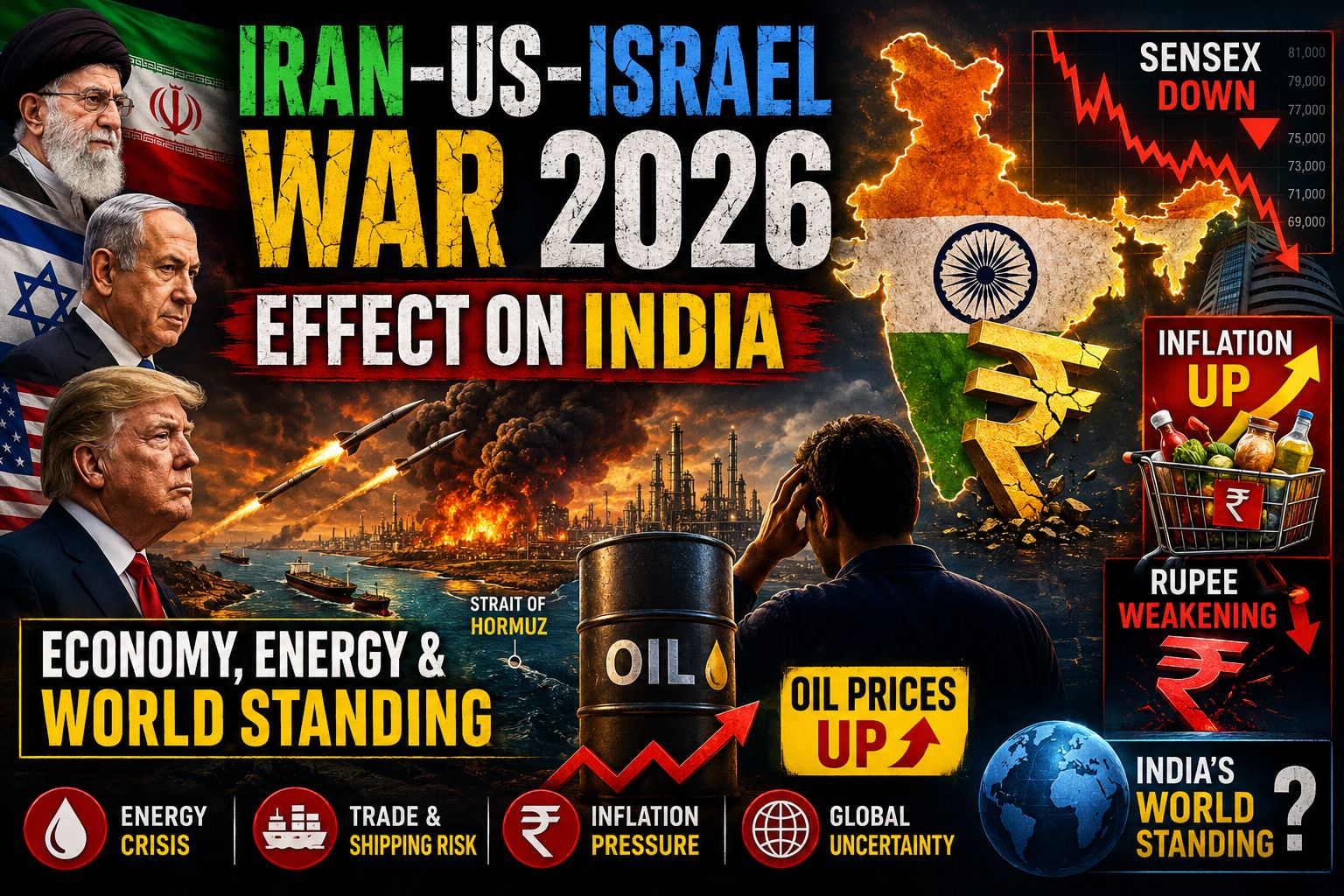
The clash between Iran, the US and Israel has become one of the biggest geopolitical crises of 2026. While the epicenter of this war is West Asia, the fallout of this war is global – and India is one of the country’s most affected by this war. The country’s heavy reliance on the Middle East for oil, trade routes and workforce linkages has deeply affected several sectors.
India’s Energy Crisis: The Great Challenge
India imports a large part of its crude oil from the Gulf countries. The dispute has raised fears of possible disruption of supplies through the Strait of Hormuz, one of the world’s main oil transit arteries.
Major Effects:
- Rise in international crude oil prices
- India has higher fuel prices
- More pressure for government subsidies
When oil prices are high, so are costs for transportation, power generation and manufacturing, which put a lot of strain on the overall economy.
Inflation increases and the economy suffer
As the price of fuel increases, the price of goods and services similarly increases.
Economic Impacts:
- Increased costs of transportation and logistics.
- Food and other daily necessities are getting more expensive.
- The pressure on family budgets continues.
Imports cost more, the economy slows down and the risk of inflation rises. Indian Rupee may also depreciate.
Disruption of the Supply Chain and Trade
“The Middle East is a very important trade route for India. The conflict is disrupting sea routes, with risks to sea-borne trade rising sharply.
Major Issues:
- Delays in import and export formalities.
- More shipping and insurance.
- Interruption of fertilizer and LNG supply.
Such disruptions can also have negative impacts on the agricultural sector, industrial production and commercial efficiencies in general.
Impact on Indian Diaspora and Remittances
Millions of Indians live and work in Gulf countries. These expatriate workers are insecure because of this conflict.
Principal concerns:
- Unemployment and economic stagnation.
- A decrease in the size and volume of remittances.
- Possible situations requiring citizens to be evacuated back to their home country.
Remittances are a major part of the Indian economy and a fall in their volume can have a negative impact on millions of families.
India’s Diplomatic Tightrope
India has good relations with all three countries in this conflict:
- Strategic Defense Ties with Israel.
- Iran’s energy and connectivity interests.
- Economic and political integration with the US.
India has adopted a balanced and neutral position with a special emphasis on diplomacy and de-escalation. This policy is in line with the age-old Indian policy of ‘strategic autonomy’.
Security and defense implications
This strife has added to the geopolitical tensions across various parts of India.
Security Risks:
- Dangers to sea trade routes.
- More military action in nearby waters.
- Potential cyber and security threats.
India may have to improve its own defense capabilities and maritime surveillance systems to protect its interests.
Volatility of financial markets
Conflict around the world can make financial markets volatile.
Market Effect:
- Stock market volatility.
- Uncertainty regarding foreign investments.
- Gold as a haven asset is rising in price.
This poses difficult problems for investors, and for firms that want to expand their operations.
Opportunities in India
The crisis has thrown up challenges but also opened up new avenues of opportunity for India.
Strategic advantages:
- Diversification of the oil supply.
- Increasing renewable energy adoption.
- Increase in internal manufacturing industry.
- More openness in the world diplomatic business.
This can help India reduce dependence on other countries and build long-term resilience and capacity.
Conclusion
The conflict between Iran, the US and Israel is not simply a regional one, but a major disruption of the world economy and geopolitics. Clearly this conflict has implications on a whole range of fronts for India-energy security, inflation, trade and international diplomacy.
But with strong policy choices, diversification strategies and diplomatic balancing, India can successfully navigate this crisis and emerge stronger on the world stage.