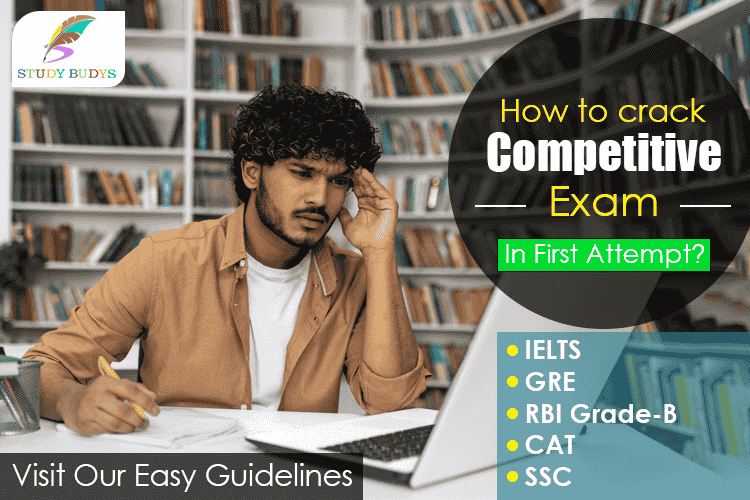
Every year, numerous candidates participate in various competitive exams, from IELTS and GRE to RBI Grade-B and CAT, and they all compete for the top spots. In this blog, we will discuss effective strategies for tackling the different sections of these exams, which will give you an edge in the competition.
Tips for Success in Competitive Exams
Here are some tips:
General Knowledge:
General knowledge is an essential, high-scoring, and time-saving section in competitive exams. Excelling in this section is crucial for all exams, such as RBI Grade-B, GATE, and SSC exams.
Stay Updated:
By reading publications like newspapers and magazines, you can stay informed about events happening across the country and the world. Focus on topics relevant to your exam pattern, such as business and economics for the RBI Grade-B exam.
Take Notes on Various Topics:
This helps in memorizing the content, and the notes are also convenient to refer to while revising.
Prioritize breadth over depth, because just as there is a limit to how many apples a bag can hold, there is also a limit to how much you can remember. Read all the topics, but briefly.
Revision and Practice:
Regular time should be dedicated to revision and practicing mock tests based on current affairs.
Excelling in Verbal Ability
The verbal ability test is an assessment of your basic English language skills. Here are some steps you can take to excel in this section:
Reading Comprehension:
Try scanning the questions before looking at the passages to achieve effective results.
Regular Reading:
Improve your sentence construction abilities through regular reading practice.
Mock Test Papers:
Mock tests serve as a self-assessment environment. Regular practice tests provide candidates with a simulated exam environment.
Vocabulary Building:
Master the fundamentals:
Identify the basic concepts and equations and try to consolidate them by revising them frequently to increase speed and accuracy.
Quick math techniques:
Memorize multiplication tables and cube roots to perform calculations quickly in the exam.
Strategic approach
Start with the questions you can answer most easily, this will increase your speed. Requirements for logical aptitude for competitive exams –
Achieving proficiency requires a lot of planning. Being aware of your weaknesses is essential so that more emphasis can be placed on improvement.
Learn to manage stress.
Your practice should start with basic topics like directions, analogies, etc. Once you gain confidence, you can practice more complex puzzles. Coding-decoding puzzles can also be attempted.
Effective time management strategies are needed to balance competitive exam preparation with work demands:
For example, --
Conclusion-
Breaking down study sessions into manageable parts with short breaks makes them more effective. Performance can be tested periodically to see if there has been any improvement in your study routine. If you consistently apply these strategies, it will undoubtedly increase your employment opportunities and help you succeed in competitive exams.