
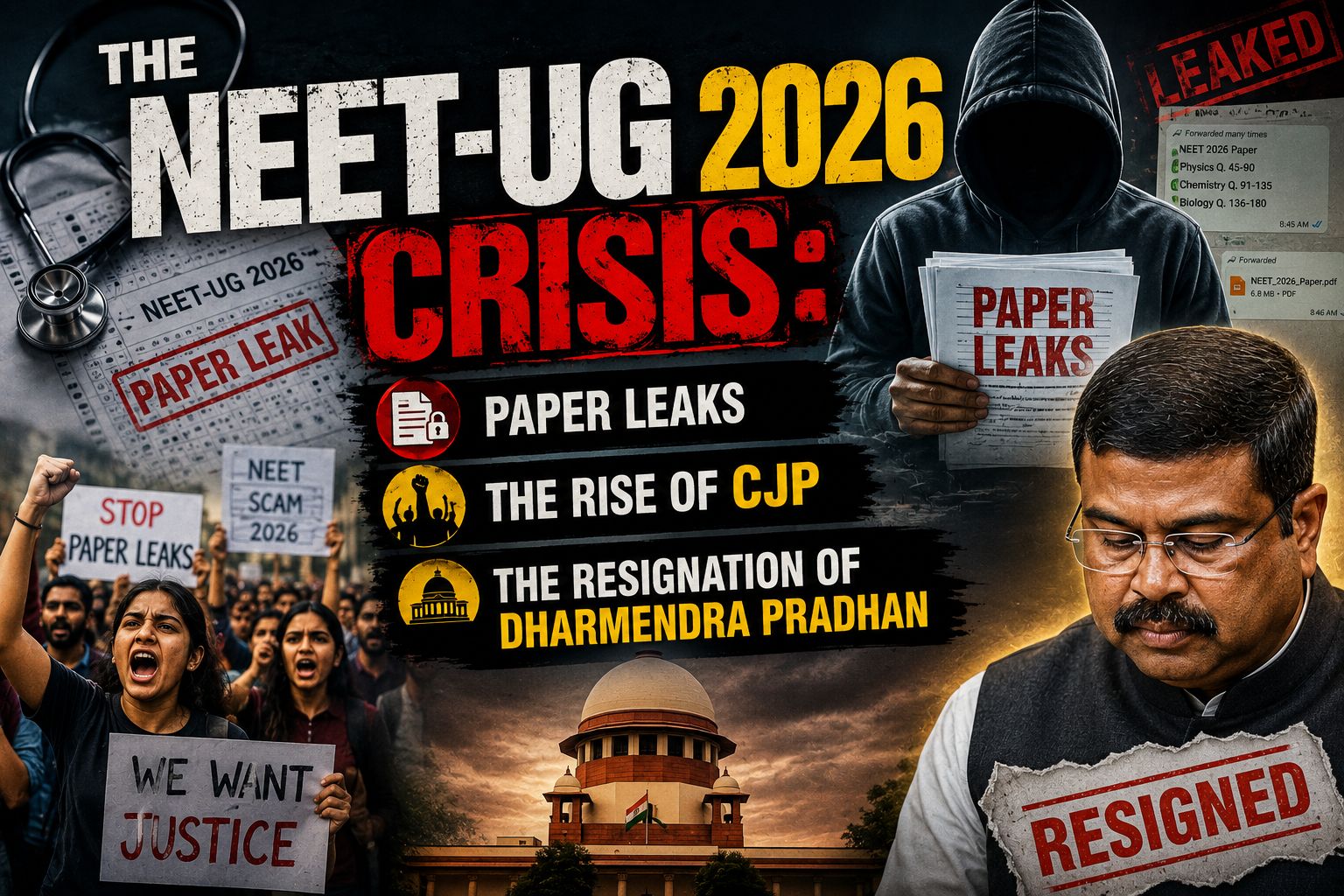
The Indian educational system is witnessing an upheaval unlike any seen before, following allegations of leaks and malpractice during the 2026 NEET-UG examination. Starting from a mere student protest, the movement has now developed into a national phenomenon, characterised by mass rallies, lawsuits, and active interventions of civil society organisations.
Protest students, supported by the youth political group Cockroach Janta Party (CJP) and prominent climate change activist Sonam Wangchuk, are grabbing headlines at Jantar Mantar in New Delhi. At the same time, Union Education Minister Dharmendra Pradhan and the Ministry of Education are being put under political pressure for making wide-ranging changes in the education system, resulting in the resignation of Dharmendra Pradhan.
The Spark: The NEET-UG 2026 Paper Leak
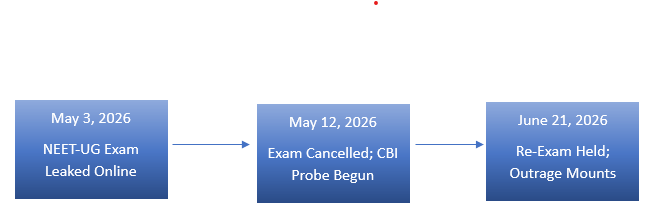
The event was sparked on May 3, 2026, when more than 22 lakh students appeared for the national-level medical entrance test NEET-UG.
- The Discovery: Soon after the exam, an instructor in Rajasthan named Shashikant Suthar realised that the “guess paper” PDF file shared via WhatsApp (sold for up to ₹5,000) actually contained the same questions as given in the question paper, specifically in Chemistry.
- The Cancellation and CBI Inquiry: Suthar reported the incident to the National Testing Agency (NTA), the Ministry of Education, and the CBI. It was evaluated that the leakage was part of a larger pattern of corruption, leading to the arrest of a school principal in Pune (former NTA subject expert) who had remembered and passed on the questions.
- Re-Examination Announcement: On May 12, the NTA cancelled the entire exam and ordered a re-exam scheduled for June 21.
The Genesis: Formation of the Cockroach Janta Party (CJP)
The youth movement gained its identity from a controversial court hearing.
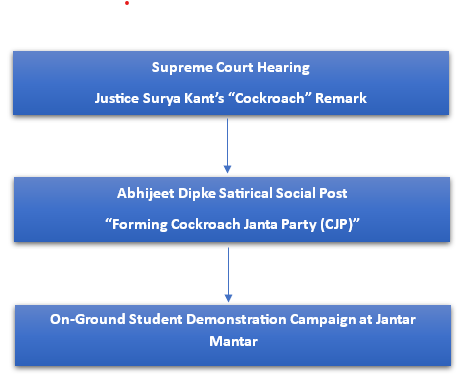
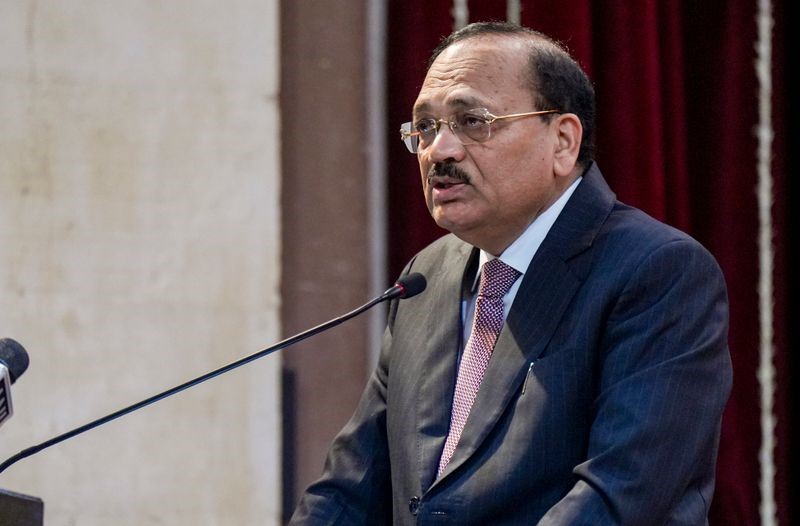
The Supreme Court Remark: On May 16, during another Supreme Court hearing, a statement made by Justice Surya Kant about unemployed youth was construed on social media as being directed at candidates in comparison to “cockroaches”. Although, Justice Surya Kant clarified that his remarks had been misconstrued. He said his observations were taken out of context. He said “The matter being discussed concerned lawyers who had entered the profession on the basis of fake or false law degrees. By fake degrees, I mean unrecognised degrees. Some people had never attended law colleges. Sitting at home, they somehow obtained degrees.”
Political Communication Strategy: To retaliate, political communication strategy expert Abhijeet Dipke floated the idea of ‘Cockroach Janta Party (CJP)’ as a satirical campaign over the internet. That social media campaign became popular among several social networking sites.
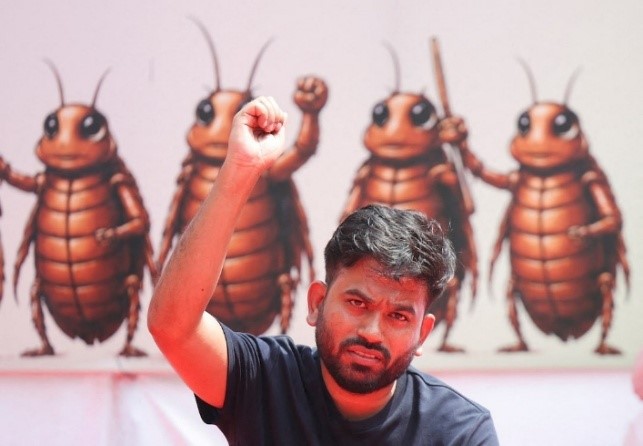
- On-Ground protest: On June 20, 2026, after the return of Abhijeet Dipke to India, CJP organised a 24/7 sit-in protest in Jantar Mantar, Delhi.
- Main Demands Charter:
- Resignation of Union Education Minister Dharmendra Pradhan.
- Institutional reform in national examination authorities.
- Financial compensation to the families of those students who have committed suicide due to disruption of examinations.
- Withdrawal of FIRs registered against student protesters.
Escalation, Parliament March, and Government Interface
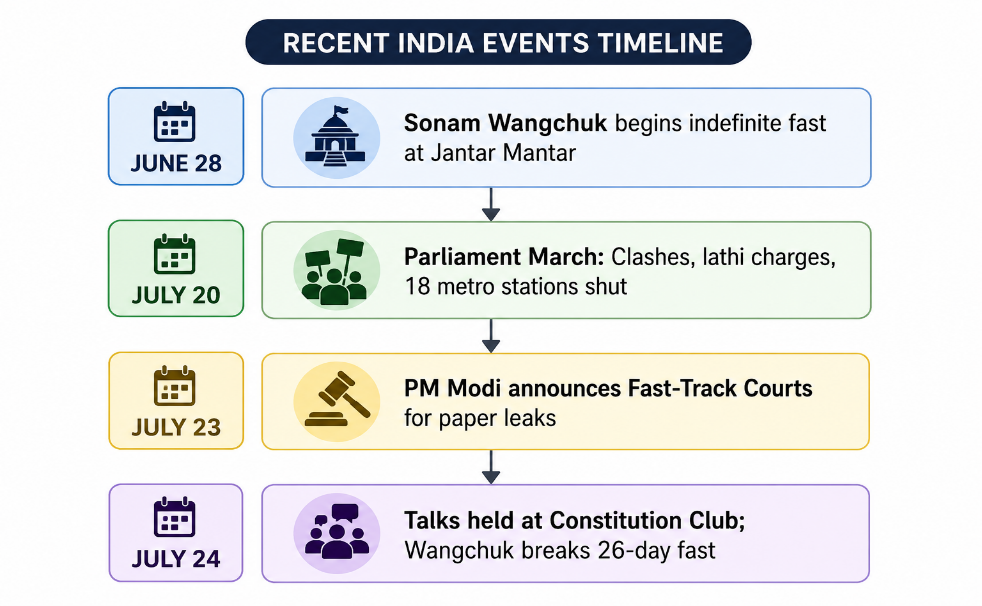
Role of Sonam Wangchuk: Sonam Wangchuk, a reformist and activist for education reform, participated in the demonstration at Jantar Mantar and went on an indefinite hunger strike on June 28, 2026. Wangchuk was shifted to the Medanta Hospital in Gurugram amid his health issues on July 18.
- Clashes of July 20: The demonstrators marched towards Parliament, which they named it as “Chalo Sansad”. The security forces adopted crowd-control measures, which led to violent clashes between the protesters and the police, leaving more than 180 protesters and policemen injured, as well as temporary restrictions on central Delhi metro stations.
- Government Policy Decisions: On July 23, 2026, Prime Minister Narendra Modi made some announcements about the decision, which included the appointment of Fast-Track Courts for paper-leak cases and legislative amendments.
- Negotiations: Formal negotiations took place between representatives of the government (including Ministers J.P. Nadda and Jitendra Singh) and the CJP representatives (Saurav Das and Ashutosh Ranka) at the Constitution Club of India. With the reassurances about the cases against peaceful demonstrators, Wangchuk ended his hunger strike.
Sonam Wangchuk's 26-Day Hunger Strike
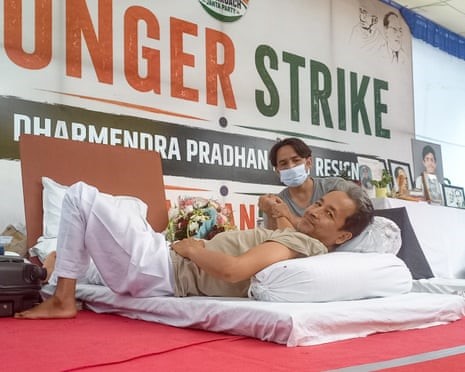
[Sonam Wangchuk during NEET protest fast at Jantar Mantar]
- Core Purpose & Demands
- Student Solidarity: Joined the Cockroach Janta Party, on June 28,2026, at Jantar Mantar, Delhi, to protest irregularities in the NEET-UG Examination.
- Reforms: Legal framework for anti-leak laws, revamp testing agencies, compensation for family members of affected students, and resignation of Union Education Minister Dharmendra Pradhan.
- Duration & Health Impact
- 26 Days Long: Fasted continuously for 26 days.
- Hospitalization Due to Poor Health: Had lost around 11 kg in weight and was moved to hospitals (Safdarjung and Medanta) temporarily on account of poor health.
- Government Negotiations & Solution
- Government Assurances: On July 23, 2026, concluded his hunger strike following government’s written assurances by the senior union ministers that no penal actions/FIRs would be taken against peaceful student protesters along with the Fast-Track Courts for paper leakages.
- Ministerial Resignation: Resigned on July 25, 2026, and Sonam Wangchuk called it “Victory of Democracy”.
The Climax: Dharmendra Pradhan's Resignation
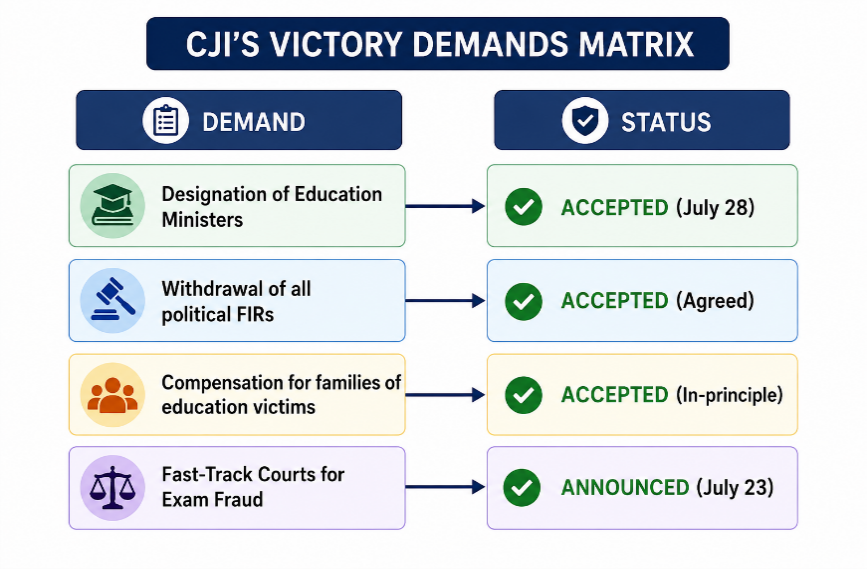
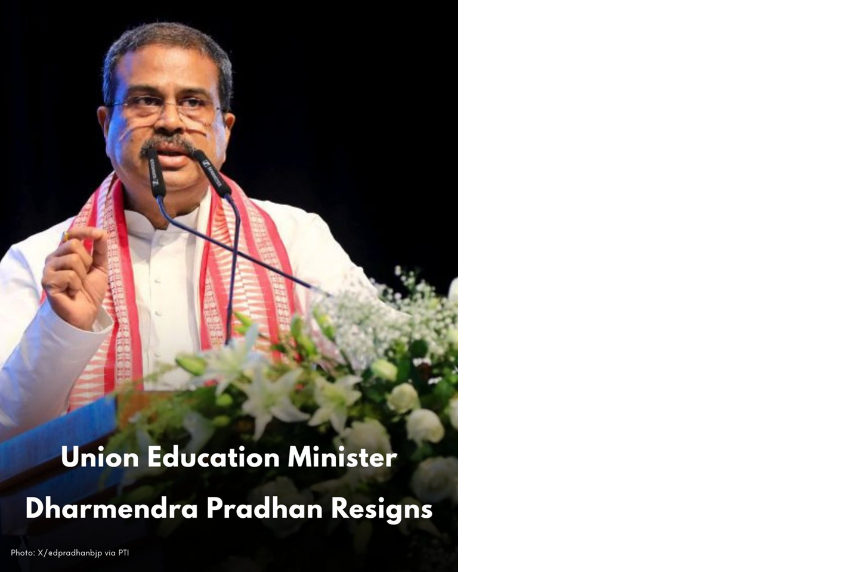
Even with policy amendments, CJP did not fumble: The resignation of Dharmendra Pradhan as a matter of moral obligation was non-negotiable.
On Saturday, July 25, 2026, the Union Education Minister Dharmendra Pradhan formally tendered his resignation to the honourable Prime Minister.
In his resignation statement, Pradhan noted: "The developments of the past days have saddened me deeply. From the first day, I took responsibility... I am stepping down to protect the future of students, preserve national unity, and prevent anti-national forces from exploiting student distress."
Dharmendra Pradhan Welcomed in Parliament by MPs Following CJP Protest Resignation
The former education minister, Dharmendra Pradhan, appeared publicly for the first time on July 27, following weeks of protests triggered by the Cockroach Janta Party (CJP).
Dharmendra Pradhan, who has recently resigned from his post, received an enthusiastic welcome from some of his colleagues in parliament, shouting, "Long live Dharmendra Pradhan". Dharmendra Pradhan is the representative of the eastern district of Sambalpur in Odisha.
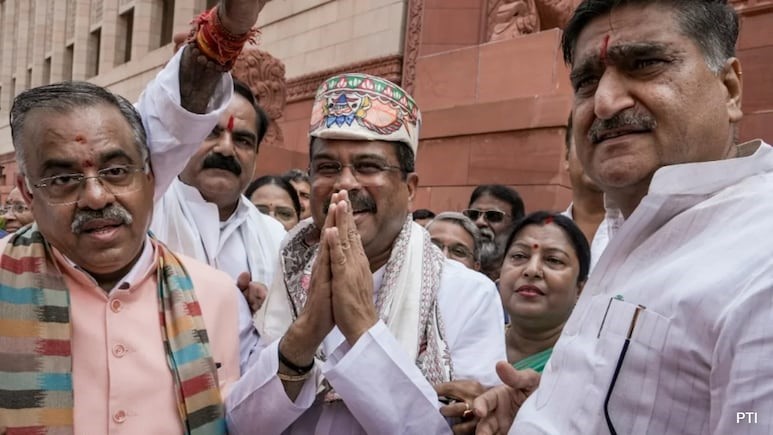
[Source NDTV ©: Dharmendra Pradhan being welcomed by ruling MPs as he arrived in Parliament next day after resignation]
Glimpse: https://www.instagram.com/reel/Dbc602kB9jV/?utm_source=ig_web_button_share_sheet
Movement Resolution and Results
In light of the resignation announcement, elation spread at Jantar Mantar:
- Withdrawal from Protest: The Chief Spokesperson of CJP, Sourav Das, along with the founder of CJP, Abhijeet Dipke, declared the conditional withdrawal of the 36-day protest upon gaining written pledges about FIR withdrawal and compensation.
- The Aftermath of “Cockroach Movement”: The activist Sonam Wangchuk called the resolution a “victory of democracy…right out of the streets,” as Gen-Z political participation also came into national limelight.
CJP's Role to Monitor Paper Leaks in Punjab and Karnataka
After completing its 36 days of agitation in Delhi, Cockroach Janta Party (CJP) is changing its focus from national paper leaks to the state level:
- From a Delhi-based watchdog to a State-based one: The leadership of CJP informed that the party will move ahead with checking the malpractice in recruitment and entrance exams at the state level.
- Punjab: The founder of CJP, Abhijeet Dipke, informed that the party was examining ground reports regarding leaks in Punjab (for example, in the Pharmacy Officer recruitment test) and formulating its strategy.
- Karnataka: CJP will coordinate with the local students’ association of Karnataka for ground implementation of the new law against paper leaks in the state so that severe punishment be meted out to cheating syndicates and not to the innocent candidates.
- National Alignment: CJP continues to campaign for the establishment of fast-track courts at the state level, a transparent testing procedure, and protection of protesting students.