What is the role of rivers in the geographical landscape of India?
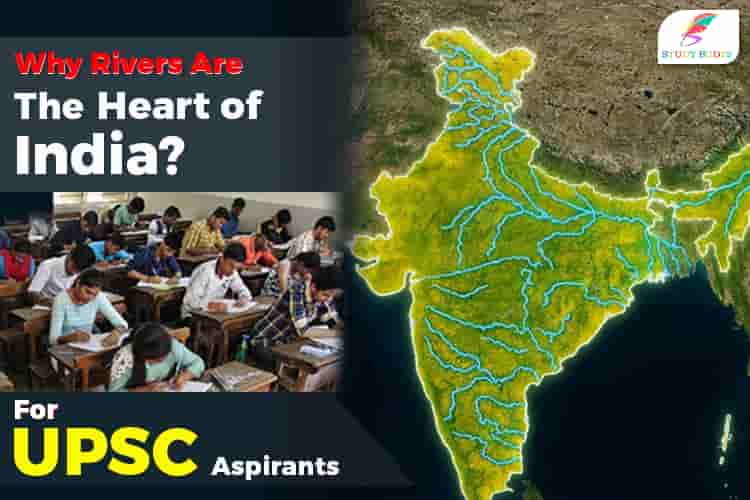

What is the role of rivers in the geographical landscape of India?
Types of Rivers of India
Our country, India, is a beautiful and diverse country with a rich geography and climate. Because India is a riverine country and is rich in environment, culture, and economy. The rivers are divided into four categories based on their source, flow pattern, and the area they flow through. These are Himalayan rivers, Deccan rivers, coastal rivers, and rivers of internal drainage basins. However, we should know that each type of river has immense importance, which makes a unique contribution to the ecological balance, agricultural productivity, and cultural heritage of our country. This is precisely why India's river system has become one of the most important natural resources in the world.
Himalayan Rivers-
The Northern Himalayas are one of the most iconic and diverse regions in the world. These vast mountains are surrounded by endlessly flowing rivers that have greatly enhanced the importance of the region. Fed by glaciers, these mighty Himalayan rivers play a vital role in providing water for drinking, irrigation and power generation for millions of people in both India and Nepal. The economy and environment of the region depend on these rivers. In this article, we will look at the importance of rivers and how people’s daily needs and livelihoods are largely dependent on them.
Characteristics of Himalayan Rivers-
The Himalayan rivers form the most important and powerful system in the world. The daily lives of millions of people in our country and neighboring countries like Nepal, Bhutan, China and Bangladesh, as well as their agriculture, transport, industry and wildlife, depend on these rivers. This is why the Himalayan rivers are called the lifeline of South Asia.
Characteristics of Himalayan Rivers:
The main characteristics of the Himalayan Rivers are:
Nature: Himalayan rivers are mainly perennial in nature, which means they have water flow throughout the year.
Length: They create a long course from their origin to the estuary.
Course: These rivers perform erosionally in their upper course due to rapid flow and carry heavy loads of sand and silt soil.
Deltas: They all have very well developed deltas.
Name of the Himalayan Rivers:
Ganges River: These rivers flow through Rishikesh, Haridwar, Kanpur, Varanasi, and Kolkata to the Bay of Bengal.
Brahmaputra River: Brahmaputra flows east into Tibet, south through the Himalayas into India, and then west and south into Bangladesh.
Indus River: The Indus River flows through diverse landscapes, including mountains, deserts, and plains in China (Tibet), India, and Pakistan before joining the Arabian Sea in Pakistan.
Yamuna River: It flows southerly through the Himalayan foothills, Uttarakhand, and the Indo-Gangetic plain, between Uttar Pradesh and Haryana state to the west.
Importance of Himalayan Rivers:
The Himalayan Rivers play an important role in the lives of those who live in their vicinity.
Water source: These are the main water sources for fresh drinking water, irrigation, and industry.
Biodiversity: The Himalayan Rivers support diverse wildlife and other aquatic life that belong to their course.
Transportation: They also provide transportation routes for people and goods.
Tradition: These mighty waterways play an important role in the religious traditions of the people in the region.
Peninsular Rivers:
The rivers that originate from the hills and peninsular plateaus are called Peninsular Rivers of India. These rivers, mostly rise within the Western Ghats and end in the Bay of Bengal. Peninsular rivers receive their water only from rainfall; that’s why these rivers water only flows in the rainy season.
Characteristics of Peninsular Rivers:
Nature: These Rivers are mainly fed by rainfall, so their flow is seasonal.
Age: Peninsular Rivers are marked as old rivers, among others.
Length: Compared to the Himalayan Rivers, Peninsular Rivers are smaller and shallower.
Flow Path: This type of river originates in the hills of the Western Ghat and outfalls in the Bay of Bengal.
Basin: Peninsular river basins are also smaller than the Himalayan River.
Name of the Peninsular River:
Mahanadi River: Mahanadi flows through Chatties and is combined with the Jonk and Hasdeo before entering Odisha and ending in the Bay of Bengal.
Godavari River: This river flows through the states of south-central India and finally falls into the Bay of Bengal.
Krishna River: From Western Ghats, the river turns east into Andhra Pradesh and flows south from the southeast and joins the Bay of Bengal.
Kaveri River: It flows through Karnataka, Tamil Nadu, Kerala, and Puducherry before joining the Bay of Bengal.
Narmada River: Narmada flows across Madhya Pradesh, Maharashtra, and Gujarat and ends into the Bay of Bengal.
Tapi River: The Tapi River flows through Madhya Pradesh, Maharashtra, and Gujarat and joins the Arabian Sea.
Importance of Peninsular Rivers:
Water source: Peninsular Rivers are called the Lifeline of Central and South India for water source and hydrochloric power.
Economical Importance: These rivers support agriculture and industries in nearby areas of their course.
Biodiversity: The river banks and deltas are home to many species.
Cultural & Regional Importance: Those rivers are both culturally and regionally significant for Indian people.
Coastal Rivers:
The rivers that are related to the coastal regions of India are called coastal rivers of India. The Indian states that lie close to the sea are called coastal areas. The coastal rivers belong to the states including West Bengal, Gujarat, Odisha, Tamil Nadu, Andhra Pradesh, Kerala, Karnataka, Goa, and Maharashtra. These states have seasonal rainfall and sandy tracks, so the coastal rivers are almost regarded as streams, especially on the west coast. Most of the coastal rivers are non-perennial.
Characteristics of Coastal Rivers:
- Course: Coastal rivers in India tend to be shorter and have steeper gradients than other major rivers.
- Flow: These rivers are fed by monsoon water, so they observe high flow during monsoons and low flow in dry months.
- Deltas: Due to steep gradients and fast flows, coastal rivers carry high sediment loads and form deltas, sandbars, and estuaries.
- Wetlands: These rivers have narrow and limited wetlands east or west of the coastal plains, which limit their water holding capacity compared to larger rivers with extensive reservoirs.
- Floods: The short courses of these rivers are prone to flash floods due to rapid collection of water during monsoons, affecting coastal communities.
Names of the Coastal Rivers according to states:
West Bengal: Subarnarekha, Matla, Bidyadhari, Gosaba, Ichamati, Haldi, Thakuran, Kalindi, Raimangal, etc.
Tamil Nadu: Thamirabarani, Vaigai, Palar, Vellar, Adyar, Paravanar, Gundar, Cooum, Tamiraparani, etc.
Karnataka: Netravati, Sharavathi, Phalguni, Kali, Gangavali, Sowparnika, Aghanashini, Venkatapura, Varani, Sita, etc.
Andhra Pradesh: Penna, Nagavali, Gosthani, Kandivalasagedda, Swarnamukhi, Sarada, Champavathi, Godavari, Krishna, etc.
Maharashtra: Ulhas, Vaitarana, Kundalika, Savitri, Amba, Terekhol, Patalganga, Vcashishti, Shastri, etc.
Importance of Coastal Rivers:
- Agriculture: Coastal rivers support agriculture by providing important water resources for irrigation of the fertile plains.
- Water Supply: These rivers play an important role in providing adequate drinking water to the growing population of coastal cities.
- Livelihood: Estuaries and deltas of these rivers are rich in fish, and other aquatic life of coastal rivers contributes significantly to the livelihood of millions of people.
- Economic Impact: Coastal rivers provide water for various agricultural and industrial needs. Also, the scenic landscapes of rivers, estuaries, and waterfalls attract tourists, help the tourism industry through activities such as river rafting and boating, and help in economic development.
- Biodiversity: Rivers support a variety of ecosystems, including mangroves, wetlands, estuaries, and delta areas that are home to a variety of plant and animal species.
- Sediment transport: The sediment carried by these rivers helps maintain land fertility by nourishing coastal and deltaic soils.
- Hydroelectric power: The rapid flow and steep gradients of coastal rivers are suitable for small-scale hydropower generation, which contributes to local electricity supply.
- Natural barriers: The estuaries and mangroves of coastal rivers also act as natural barriers against coastal erosion, storm surges, and tsunamis.
- Rivers of Inland Drainage Basins:
In the case of inland drainage basins, rivers and streams evaporate into inland lakes, arid regions, or salt flats rather than flowing into the sea. These basins are found in parts of India, Rajasthan, and Gujarat. The flow of these rivers is highly dependent on seasonal rainfall and is often erratic, making their impact on agriculture and settlement very limited.
Characteristics of Rivers of Inland Drainage Basins:
- Drainage system: These rivers drain into inland lakes, salt flats, or evaporate into deserts instead of oceans.
- Flow: Most of these rivers are irregular due to seasonal flow.
- Salinity: As these rivers do not drain into the sea, minerals and salts accumulate in the basin, resulting in high salinity levels in the water and surrounding soil.
- Length: These rivers are generally shorter and have smaller reservoirs than other river systems.
- Nature: Rivers in inland drainage basins are ephemeral in nature. They flow only during monsoons.
- Impact on Agriculture: The irregular flow of these rivers makes them less suitable for agricultural purposes, and they often require artificial storage and management systems.
Name of the Rivers of Inland Drainage Basins:
Here is the name of some notable rivers in India's inland drainage basins, including:
Ghagar-Hakra River: Originating in the Shivalik Hills of Himachal Pradesh, this river disappears as it reaches the Thar Desert.
Luni River: It originates in the Aravalli range and ends in the Rann of Kutch.
Saraswati River: A historical river known to flow parallel to the Ghagar-Hakra, now mostly dry.
Rupen River: It flows from Gujarat to the Rann of Kutch.
Banas River: It is a tributary of the river Chambal with internal drainage features having several branches in its upper reaches.
Shankh River: It flows through Jharkhand and Odisha and joins the South Koil River.
Mahi River (in part): Part of the basin in the western region of this river is characterized by inland drainage.
Kali Indus River: Some stretches of this river originating in Madhya Pradesh are characterized by local inland drainage.
Banas: This small river originates in Gujarat and joins the Chota Ran of Kutch.
Importance of the Rivers of Inland drainage basins:
- Water Resources: Rivers like Luni and Ghagar-Hakra play an important role in meeting the water needs of the arid regions of Rajasthan, Haryana, and Gujarat.
- Agriculture: These rivers provide water for irrigation in areas with limited rainfall. For example, the Luni river basin supports agriculture in Rajasthan and Gujarat.
- Groundwater: Inland rivers contribute significantly to the supply of water to local aquifers.
- Ecological Significance: Rivers like Ghagar-Hakra support the desert ecosystem.
- Livelihood: Rivers support the livelihood of local communities through agriculture, cattle rearing, and fishing.
- Salt Extraction and Mineral Resources: These rivers are important for salt production. A lot of minerals are available in the basins of these rivers.
- Mitigation of Desertification: The irregular flow of these rivers helps in mitigating desertification by supporting vegetation.
Conclusion:
India is our riverine country. The rivers that originate in India are not just water bodies, they are our lifeline. All these rivers are dependent on them for drinking water, agriculture, transportation,hydroelectricity, etc. and these rivers have enriched the lives of crores of people. Therefore, the rivers of India play a very important role not only as natural resources, but also for the respect, protection and conservation of the future generations of India and its neighboring countries.